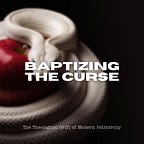

We’re living through an era of profound collective exhaustion. Every day, the news cycle delivers a fresh barrage of chaos, institutional decay, and unrelenting anxiety. People are wandering through this cultural landscape, battered by the storm, desperate for a solid foundation. They’re seeking the quiet beauty of the Kingdom, a genuine refuge for the weary, a place where the crushing weight of the world can finally be set down.
Instead, they walk through the church doors and find the sanctuary transformed into a geopolitical briefing room.
Rather than offering the peace of the Gospel or a shelter from the storm, a vocal and powerful faction of the institutional church has decided that what the weary truly need is a senseless, exhausting culture war. While the world burns and begs for living water, the “architects” of conservative evangelicalism take to their microphones to proclaim their own manufactured emergencies.
Nowhere is this more evident than in the frantic obsession with policing the pulpit and the home. Consider Albert Mohler, president of the Southern Baptist Theological Seminary and a primary architect of the conservative establishment. On The Briefing—which serves as the daily marching orders for millions—Mohler recently issued a severe mandate. He declared that women in church leadership is the ultimate “breaking point,” an existential threat that demands swift action by the credentials committee to purge any congregation that dares to allow a woman to hold the title of pastor.
But this panic isn’t confined to the establishment’s old guard. Mohler and the late John MacArthur represent the institutional gatekeepers, yet they’ve given rise to a radical, internet-driven vanguard. Figures like Joel Webbon and Dale Partridge capitalize on cultural chaos not by offering Christ, but by offering rigid, fear-based control. They look out at a fractured society and conclude that the root of our civilizational collapse is women’s insufficient subjugation. They sell a theology of suspicion, in which the feminine spirit is viewed as a volatile liability that must be managed, contained, and quieted.
We’re told this is a noble defence of biblical orthodoxy. We’re told this is a protective wall built around Eden’s original design.
It’s nothing of the sort.
The modern theological demand for female subjugation is an active baptism of the Fall. It takes the tragic, broken power struggle introduced in Genesis 3 and, in our sanctuaries, frames it as the divine blueprint for human flourishing. To enforce patriarchy is to institutionalize the curse. Ultimately, this relentless focus on female containment isn’t the triumph of a faithful church; it’s the desperate reflex of a dying empire that has forgotten how to be a shelter and only knows how to be a fortress.
The Genesis of Fracture
To understand the frantic, controlling impulses of the modern patriarchal movement, we have to go back to the soil where the empire first planted its flag. We have to return to the Garden.
For generations, the institutional church has quietly peddled a specific, heavily edited version of the Fall. It’s a narrative that perfectly serves the machinery of male supremacy. In this popular Sunday School imagining, Eve is the vulnerable, easily duped, weaker vessel. She wanders off alone, away from her husband’s protective oversight, and is cornered by the serpent. Adam, in this convenient fiction, is elsewhere—perhaps doing something suitably masculine, like naming a particularly aggressive species or tilling a distant field. He’s dragged into the rebellion only after the fact, a tragic victim of his wife’s spiritual gullibility.
It’s a fantastic story, but it’s entirely unbiblical.
The text of Genesis 3 shatters the myth of the absent Adam with a single, devastating prepositional phrase. Genesis 3:6 reads: “She also gave some to her husband who was with her, and he ate.”
He was right there.
He wasn’t on a distant hill. He wasn’t distracted by the holy labour of dominion. He stood shoulder-to-shoulder with his bride. He watched the serpent slither into their sanctuary. He listened to the enemy of his soul twist the very words of the Creator. He watched his wife—his ezer kenegdo, his fierce, equal counterpart—wrestle with cosmic deception. He, who had received the prohibition directly from the mouth of God, possessed all the theological ammunition needed to crush the serpent’s head right then and there.
Instead, he chose absolute, cowardly silence.
The root of our human fracture isn’t merely female vulnerability; it’s male passivity. Adam didn’t fight; he consumed. Ever since that moment, men have been desperately trying to overcompensate for that original cowardice. So much of the modern machinery of male supremacy—the chests puffed out in the pulpit, the rigid enforcement of domestic hierarchies, the aggressive podcasts demanding female submission—is simply an elaborate theological mask. It’s a gilded cover to hide the shame of men who still refuse to fight the actual enemy, preferring instead to flex their authority over the very women they were meant to stand beside.
But the tragedy of the Garden doesn’t end with Adam’s silence. It metastasizes in his defence.
When the holy fire of God descends in the cool of the day, the Creator doesn’t interrogate the woman first. He calls out to the man. “Where are you? Have you eaten from the tree of which I commanded you not to eat?” When confronted by the Almighty, a true king and leader would have stepped forward. He would have shielded his bride, confessed his treason, and begged for mercy. But Adam doesn’t repent. Instead, he violently throws his wife under the bus and, in the same breath, has the audacity to blame God for the arrangement.
“The woman whom you gave to be with me, she gave me fruit of the tree, and I ate.” (Genesis 3:12).
Right there, in the shadow of the Tree of Knowledge, the ultimate patriarchal strategy was born: the invention of the female scapegoat. Toxic patriarchy always requires a woman to blame, and it can’t survive without one.
This blame-shifting isn’t an ancient relic; it’s the same blueprint operating within the conservative establishment today. We build massive religious systems that force women to bear the culture’s moral, sexual, and spiritual weight. If a man falls into lust, it’s because a woman’s skirt was too short. If a marriage crumbles, it’s because the wife lacked a “gentle and quiet spirit.” If the culture secularizes, it’s because women left the kitchen and entered the workforce.
The empire designs these systems with surgical precision to ensure that men can maintain their grip on institutional power without ever taking genuine responsibility for their own sins. By framing the female spirit as an inherent liability—a dangerous, gullible force that must be managed by male headship—the patriarchs of our day absolve themselves. They construct a world in which they’re the perpetual saviours, rescuing the church from the ever-present “Fear of Eve.”
But they’re not saving the church. They’re merely repeating their father’s sins. They’re standing in the sanctuary, watching the actual enemies of the Gospel—pride, abuse of power, Christian nationalism, and greed—devour the flock, and choosing absolute, cowardly silence. And when the Spirit of God asks them what happened to the Bride of Christ, they simply point their fingers at the women and say, “The woman you gave to be with me...”
Institutionalizing the Fall
If the tragic silence of Adam is the genesis of our relational fracture, the conservative evangelical establishment is its most dedicated preservation society.
To see exactly how the empire maintains its grip on the sanctuary, we must examine how it handles sentencing in the Garden. When God addresses the woman in Genesis 3:16, He declares:
“I will surely multiply your pain in childbearing; in pain you shall bring forth children. Your desire shall be contrary to your husband, and he shall rule over you.”
For decades, the institutional church has taken this devastating, heartbreaking diagnosis of a fallen world and, from our pulpits, framed it as the divine, immutable blueprint for human flourishing. No one championed this framework more effectively or enforced it more rigidly than the late John MacArthur.
In the “MacArthur Paradigm,” which has served as the theological bedrock for thousands of pastors and conservative seminaries, the curse of Genesis 3 isn’t treated as a tragedy to be reversed by the Gospel. Instead, it’s treated as the establishment of permanent, gendered spheres of existence. In his sermons on the curse, MacArthur explicitly teaches that the Fall provides an “initial affirmation” of where men and women belong: the woman is confined to the home, and the man is assigned to the workplace. Furthermore, the woman’s “desire” is interpreted as a sinful urge to usurp her husband’s authority, and the man’s “rule” is the divinely appointed mandate to crush that usurpation and bring her into submission.
They call this Complementarianism and market it as “Biblical Orthodoxy.”
But let’s call it what it is: the institutionalization of the Fall.
When the theological establishment looks at Genesis 3:16 and demands the subjugation of women, it commits a catastrophic category error. It confuses a tragic prediction with a holy prescription. When a doctor looks at a CT scan and tells a patient, “This disease will spread and shut down your lungs,” the doctor isn’t giving a command; he’s diagnosing a tragedy. God wasn’t prescribing a holy hierarchy in Genesis 3; He was predicting a broken, power-hungry reality infected by sin.
In Genesis 1 and 2, men and women were designed for co-regency. The woman wasn’t created as a subordinate assistant but as an ezer kenegdo—a fierce, essential, rescuing counterpart. They were mirror-image image-bearers, commissioned to face outward and subdue the earth side by side. But the venom of the serpent shattered the mirror. Instead of turning outward to rule the earth together, they turned inward to rule over one another. The supreme, agonizing tragedy of the Fall is that the beautiful, terrifying mutuality of equals was replaced by the exhausting, carnal power struggle between a boss and a subordinate.
To demand that the Church strictly enforce the boss-subordinate relationship in the name of God is a staggering theological betrayal. It’s a betrayal most clearly exposed by the establishment’s own glaring hypocrisy.
Consider how the church approaches every other aspect of the Genesis 3 curse. God cursed the ground, declaring that it would produce thorns and thistles and that man would eat his bread by the sweat of his brow. Yet no conservative theologian preaches that we must submit to the thorns. We spend billions of dollars on agricultural technology, chemical herbicides, tractors, and air-conditioned combine harvesters to eliminate the sweat and the thistles.
God told the woman that her pain in childbirth would be multiplied. Yet Christian hospitals don’t ban epidurals. We spend billions on modern medicine, neonatal intensive care units, and anesthesiology to ease the agony of childbirth.
We actively and aggressively wage war against every other consequence of Genesis 3. We rightly believe that pushing back the darkness of the Fall is a good, redemptive, and Kingdom-minded endeavour. We believe that alleviating the curse of disease, poverty, and ecological decay is the work of the Gospel.
But suddenly, when it comes to the fractured power dynamic between men and women—when it comes to the terrifying reality of male domination—the institutional Church slams on the brakes. They lay down their weapons. They build a massive, impenetrable fortress around this part of the curse, mount theological cannons on the walls, and call it “orthodoxy.”
Why? Because fighting the thorns yields no earthly reward. Fighting the pain of childbirth yields no leverage within institutions. But fighting to preserve the subjugation of women? That yields power. It grants the men in the briefing room absolute, unquestioned authority over half the Church’s population. It allows them to build an empire where they’re the sole executives.
They’re not defending Eden’s pristine beauty. They’re fiercely protecting the serpent’s venom because they’ve learned to monetize the poison.
If we’re filled with the Spirit of the resurrected Christ, we’re called to be a new creation. We’re called to crush the serpent’s head, not to baptize his handiwork. Jesus didn’t go to the cross and walk out of the tomb simply so men like John MacArthur and Albert Mohler could manage the curse more efficiently. He came to break it. Whenever the Church demands that a woman shrink back, bury her gifts, and submit to a man’s carnal rule simply because he possesses a Y chromosome, it’s not practising biblical fidelity. It’s raising a white flag to the Fall. It’s looking at the victory of the resurrection and declaring, “No thank you, we prefer the grave.”
The Theology of Suspicion
If John MacArthur and the conservative establishment provided the architectural blueprints for institutional patriarchy, the radical, internet-driven vanguard is now forging its iron bars.
To understand how this theology operates on the ground, we have to look beyond the pulpits and into our curated digital feeds. The algorithm has birthed a massive, highly profitable ecosystem dedicated to a very specific vision of “Biblical Womanhood.” On the surface, the aesthetic is soft, nostalgic, and aggressively pastoral. It’s a world of sourdough starters bubbling in warm kitchens, floral dresses drifting through sunlit gardens, and the quiet, rhythmic beauty of domestic order. It presents itself as a sanctuary—a return to a simpler, holier time before the noise of the modern world shattered the home’s peace.
But if you strip away the sepia-toned filters and listen to the rhetoric of the men driving this movement—figures such as Joel Webbon of Right Response Ministries and Dale Partridge of Relearn—the softness instantly evaporates. The sourdough and the flowers are revealed to be nothing more than decorative trim on a gilded cage.
While the older establishment often couches its patriarchal views in polite, academic theological treatises, this new vanguard says the quiet parts out loud. They look out at a fractured, chaotic society and conclude that the root of our civilizational collapse is women being granted too much freedom. To fix the culture, they argue, we must aggressively contain the female spirit.
They build this cage on a foundational premise that we can call the Theology of Suspicion.
Drawing heavily on a weaponized reading of 1 Timothy 2:14 (“and Adam was not deceived, but the woman was deceived and became a transgressor”), they construct a terrifying ontology of liability. In their framework, Eve didn’t merely make a tragic mistake; rather, her failure reveals that the feminine nature is inherently gullible, emotionally volatile, and dangerously susceptible to deception. Therefore, a woman isn’t viewed as an equally competent co-heir of grace but as a perpetual spiritual liability. She’s a ticking time bomb of heresy and cultural decay that must be tightly managed, insulated, and overseen by male headship.
When you believe that half the population is ontologically prone to deception, you don’t empower them; you lock them down. In the modern patriarchy movement, this lockdown is enforced through three distinct, radical bars of containment.
The first bar is the Erasure of Citizenship.
In perhaps the most shocking development of this modern movement, figures in the radical patriarchal sphere have openly begun arguing against the 19th Amendment. The repeal of women’s suffrage is no longer a fringe, dark-web conspiracy; it’s being debated and affirmed on Christian podcasts and at conferences. The argument is chillingly straightforward: because the man is the designated “head” of the household, he alone possesses the authority to represent his family in the public square. Allowing a woman to cast her own vote is to invite “rebellion” against her husband’s mandate. This is a direct assault on the concept of soul competency. It’s a theological declaration that a woman lacks the intellectual or spiritual agency to govern her own society. Her citizenship is erased, absorbed entirely into her husband’s political will.
The second bar is the Erasure of Vocation.
Under the Theology of Suspicion, a woman’s entire existence must be confined to the domestic sphere. Higher education and out-of-home employment aren’t treated as matters of Christian liberty or practical choice; they’re framed as direct rebellion against the created order. We’re told that sending a young woman to university is a waste of her fertility and a danger to her submission. We’re told that a woman using her God-given intellect in the corporate world, the sciences, or the arts is an abdication of her true duty. But beneath this hyper-spiritualized mandate lies a profound scarcity mindset and deeply fragile masculinity. The patriarchal system is terrified of female independence. If a woman is educated, financially literate, and able to provide for herself, the threat of coercion loses its power. The man can no longer be the undisputed lord of the manor if the woman isn’t entirely dependent on him for her survival. And so her vocation must be erased to preserve his supremacy.
The third bar is the Erasure of Agency.
When women speak out against the abuses, suffocating restrictions, and spiritual trauma inflicted by these patriarchal systems, the vanguard employs its final tactic: conspiratorial infantilization. They refuse to acknowledge that women might have legitimate, righteous grievances against a historical power structure that has often crushed them. Instead, any pushback is immediately dismissed as the demonic influence of “Feminism.” In this worldview, feminism is framed as an elite, Marxist, Deep State plot designed to destroy the nuclear family. If a woman complains about the cage, it’s not because the cage is cruel; it’s because the culture has “tricked” her gullibility into believing she’s oppressed. This completely erases her agency. It tells the woman that she can’t trust her own mind, her own pain, or her own reading of Scripture.
This is the ultimate tragedy of the Theology of Suspicion. It demands that a woman shrink herself to fit inside a man’s fear. It demands that she bury the glorious, dangerous, kingdom-shaking gifts the Holy Spirit has given her, simply because the men in the room are terrified of what might happen if she used them. The radical patriarchal movement doesn’t love biblical womanhood; it’s simply paralyzed by the Fear of Eve.
Matriarchs of the Machine
The patriarchal system is inherently fragile. If it were truly a divine, self-evident order woven into the fabric of creation, it wouldn’t require constant, frantic enforcement. But as an artificial construct—a baptism of the Fall—it requires a massive propaganda apparatus to sustain itself. And the empire’s propaganda machine’s most vital, untouchable asset isn’t the angry male podcaster; it’s the female enforcer.
To sell the gilded cage successfully, the empire needs women inside, holding the door shut, and telling the women outside how beautiful the iron bars are. When women police other women, it provides the patriarchal establishment with the ultimate shield against accusations of misogyny.
This phenomenon isn’t new. For decades, figures like Dr. Laura Schlessinger dominated the airwaves, serving as the vanguard of female compliance. Through her blunt, “tough love” radio broadcasts, she taught an entire generation of women that the survival of their marriages depended almost entirely on their willingness to shrink themselves. She trained women to coddle male fragility and to assume the blame for their husbands’ moral failings, paving the way for the modern ecosystem by casting female subjugation as pragmatic, folksy wisdom.
Today, however, the strategy has diversified. The algorithm requires different aesthetics to reach different demographics of women.
If you’re seeking soft nostalgia, the algorithm surfaces Hannah Neeleman, known to millions as Ballerina Farm. She embodies the aesthetic pinnacle of the “tradwife” movement. A Juilliard-trained dancer who married into immense wealth, she presents a highly curated pastoral fantasy of submissive homesteading. It’s a brilliant piece of digital marketing that disguises immense financial privilege and a gruelling physical reality behind the soft-focus lens of baking sourdough from scratch. She makes the erasure of vocation look like a peaceful, holy retreat from the modern world, convincing exhausted women that their salvation lies in a return to the stove.
If you lean toward the secular, aggressively anti-feminist “Manosphere,” the algorithm feeds you Pearl Davis of JustPearlyThings. Davis has built a lucrative empire by functioning as the ultimate “pick-me” grifter. She openly lobbies for the erasure of citizenship, famously arguing that women shouldn’t have the right to vote, all to appease an audience of bitter, red-pilled men. She profits handsomely by selling out her own gender, proving that the “Fear of Eve” can be monetized even without a theological wrapper.
But the most effective enforcers are those who blend right-wing politics with polished theology. Enter Allie Beth Stuckey. With a bright, relatable charm, she serves as the Reformed theological cover for the culture war. She takes the MacArthur and Mohler establishment’s rigid, fear-based complementarianism and translates it into a neat, highly digestible format for suburban moms. She weaponizes theology to convince women that advocating for their own agency—or questioning the political dogmas of the Christian Right—is a dangerous slide into Marxist heresy.
Yet perhaps no figure embodies the staggering, dizzying hypocrisy of this movement quite like Erika Kirk. Following the tragic death of her husband, Charlie Kirk, Erika was propelled into the highest echelons of conservative power, taking over as CEO of Turning Point USA. Consider the profound paradox of her position: She’s the chief executive of a massive, multimillion-dollar political machine. She commands audiences of thousands, issues organizational directives, and serves as the public face of a national political movement.
And what does she do with this immense, highly public executive power? She stands at the podium and tells young women that their highest, God-given role is to embrace traditional submission and focus on domesticity. In a recent commencement address at Hillsdale College, while accepting an honorary doctorate, she looked out at the female graduates and explicitly commanded them to shape their lives around the home, urging them to marry young and have children before they can even afford to.
It’s the purest distillation of the patriarchal grift: Executive power for me, submission for thee. Erika Kirk can serve as a CEO only because of the very feminist advances that she and her organization actively demonize. She uses the hard-won freedom of the public square to tell other women to go back to the kitchen. This is the ultimate tragedy of the female enforcer. They’re permitted to speak, permitted to lead, and permitted to hold massive institutional power, but only on the condition that they use their platforms to convince other women to stay silent and subordinate.
These women aren’t demonstrating biblical womanhood. They’re merely middle management in a dying empire. They prove that the Theology of Suspicion isn’t about protecting women; it’s about controlling them, even if it requires women to hold the keys to their own cages.
Ezer Unleashed
To justify the gilded cage, the empire must commit a profound act of linguistic and historical sabotage. It must rewrite the very language of creation and erase the actual history of God’s redemptive work.
The sabotage begins in Genesis 2 with the phrase ezer kenegdo, commonly translated as “helper.” In English, “helper” has been systematically domesticated. It conjures the image of a subordinate assistant—someone who fetches coffee, organizes files, and quietly supports the executive’s visionary work. The patriarchal establishment leans heavily on this domesticated translation, arguing that a woman’s primary function is to facilitate her husband’s ministry and ambitions.
But the Hebrew text resolutely refuses this demotion.
Throughout the Old Testament, the word ezer is almost exclusively used to describe God Himself in times of desperate military crisis. It’s the cavalry coming over the hill, a fierce, saving rescue. God is our ezer—our shield and our defender. When God creates the woman and calls her an ezer kenegdo, He isn’t creating a secretary; He’s creating a warrior-ally. He’s bringing forth an equal, opposing strength—a mirror-image counterpart equipped to stand shoulder-to-shoulder with the man in the agonizing, glorious work of subduing the earth. She’s not a liability to be managed; she’s a vital, life-saving force without which the human project is doomed to fail.
Whenever the Kingdom requires this fierce, rescuing strength, God doesn’t hesitate to bypass fragile human hierarchies to unleash His daughters. And every time He does, the biblical narrative shatters the containment bars of modern patriarchy.
Consider the erasure of citizenship and political agency. The modern patriarchal vanguard claims that women possess no legitimate authority in the public square. Yet the Book of Judges presents us with Deborah. She wasn’t a quiet, domestic influence; she was Israel’s supreme political, judicial, and military leader. She held court under a palm tree, dispensing justice to the nation, and commanded the army commander to ride into battle. God didn’t apologize for her leadership, nor did He present it as a tragic compromise. He used her executive authority to crush the enemies of His people.
Consider the erasure of vocation and the prohibition of female theological instruction. The establishment tells us that women are too easily deceived to handle the heavy lifting of biblical interpretation. Yet in 2 Kings, when King Josiah discovers the lost Book of the Law and the entire nation is plunged into a theological crisis, the King and the High Priest don’t convene a council of men. They bypass the male prophets and go directly to Huldah, the recognized theological authority in Jerusalem. It was a woman’s prophetic exegesis that sparked the greatest spiritual reformation in the history of Judah.
Consider the erasure of economic independence. The algorithm tells us that a holy woman must be entirely dependent on a husband’s provision. Yet the Book of Acts gives us Lydia. She was an independent dealer in purple cloth—a wealthy, executive businesswoman navigating the Roman Empire’s international trade routes. No husband is mentioned to validate her existence. Instead, she uses her immense economic agency to fund the Kingdom, hosting the first church of Philippi in her own estate.
If the Theology of Suspicion were true—if women were inherently volatile liabilities—these women shouldn’t have existed. The biblical writers should have condemned them for abandoning their posts at home. Instead, they’re immortalized as heroes of our faith.
But the ultimate shattering of the cage doesn’t occur in the Old Testament or the early church. It occurs in the presence of Jesus Christ.
Jesus entered a first-century Roman and Pharisaical culture that viewed women as literal property—a culture whose patriarchal restrictions make modern conservative podcasts look progressive. Yet Jesus never once reinforced those cages. He actively and deliberately dismantled them.
When Mary of Bethany sat at His feet, she wasn’t merely listening to a sermon. In the first century, to sit at a rabbi’s feet was to adopt the formal posture of a rabbinical student—a privilege violently denied to women. When Martha complained, demanding that Mary return to the kitchen and perform her expected domestic duties, Jesus refused. He defended her, declaring that Mary had chosen “the good portion” and that her theological education wouldn’t be taken from her. He looked at a woman and validated her mind.
When it came time for the climax of human history—the resurrection of the Son of God—Jesus made a cruciform pivot that still terrifies the religious establishment today. In a society where a woman’s testimony was literally inadmissible in a court of law, Jesus entrusted the most vital, earth-shattering message in the cosmos to Mary Magdalene. He didn’t appear to Peter or John first. He appeared to a woman and commissioned her to go and preach the Gospel to the men. She was the Apostle to the Apostles.
The Gospel of Jesus Christ isn’t a containment strategy; it’s a rescue mission. Jesus didn’t go to the cross to make the patriarchal cage slightly more comfortable. He went to the cross to tear the doors off their hinges. He calls women to be as theologically profound as Huldah, as boldly devoted as Mary Magdalene, and as fiercely authoritative as Deborah. Demanding that these women shrink back into the fear of men isn’t just bad theology; it’s a direct assault on the liberating work of Christ.
Morning in the Wilderness
The relentless obsession with female submission, the use of credentials committees to police the pulpits, and the endless podcasts debating exactly how small a woman must make herself to be considered holy—none of this is the sound of a spiritual revival.
It’s the death rattle of an empire.
When a religious institution loses its moral authority, trading the vibrant, disruptive love of Christ for the cold mechanics of political power, it inevitably defaults to policing boundaries and enforcing hierarchies. The establishment is frantic. It’s loud, terrified, and entirely fixated on its own survival. The gatekeepers will continue to manufacture crises, audit vocations, and demand absolute submission to their dying structures, because control is the only thing they have left. They will tell you that the world is ending unless they alone hold the reins of power.
But for those who are paying attention, the truth is undeniable: the world isn’t ending. It’s simply beginning again, far beyond their gates.
To the women and men who have quietly and painfully walked away from these theological briefing rooms: your departure isn’t a rebellion against God. It’s a righteous escape from a baptized curse. You haven’t abandoned the faith by refusing to participate in a machine that demands female silence while continually excusing the abuses of tyrannical strongmen. You’ve simply recognized that the Spirit of the living God can’t be contained in a gilded cage.
This is what it means to step into the Wilderness.
The architects of the culture war want you to believe that beyond their fortress lies nothing but the secular abyss. But out here, stripped of the empire’s anxiety and manufactured panic, the air is clean. We’re finally free to celebrate the beautiful, egalitarian, and liberating gospel of Jesus Christ.
Our mission in this Wilderness isn’t merely one of deconstruction. We’re not simply tearing down the iron bars; we’re here to build. We’re building tables where theological insight, pastoral care, and executive leadership are recognized through the anointing of the Holy Spirit, not by the gender of the vessel. We’re doing the agonizing, joyful work of untangling our faith from the concrete of Christian nationalism and rigid patriarchy, so that something organic, living, and true can finally take root in the soil.
Let the empire rage. Let them build higher walls and issue stricter mandates. The morning is breaking in the Wilderness.
The future of the Church doesn’t belong to the autocrats, the political strongmen, or the religious gatekeepers who gladly serve as their chaplains. The future belongs to the peacemakers. It belongs to the ezers who refuse to be silenced and to the brothers who gladly stand beside them. It belongs to those who refuse the sword and choose the cross.
We have a new inheritance to build. Take a breath of fresh air. Guard your joy fiercely. Let’s get to work.


